


In my last issue I wrote that green hydrogen is not doomed to fail. It is waiting for courage. Courage is easier to build if a reward is waiting for you. Companies can be rewarded through new revenues, countries can be rewarded by building new, well-paid industrial jobs.
To understand how rewards are being distributed, let’s have a look at wind and solar in this issue, and at space and green hydrogen in the next. In wind and in parts of the solar value chain, Europe held leading patent positions, the public funds and a clear political will. In both of them, Europe built a lead market. And yet one became a European success story, and the other an expensive lesson.
In Issue #1 I used three gates to judge whether a technology will make it. Can it scale? Is it industrialised? Is there a market? Europe is good at the first gate; the other two are trickier.
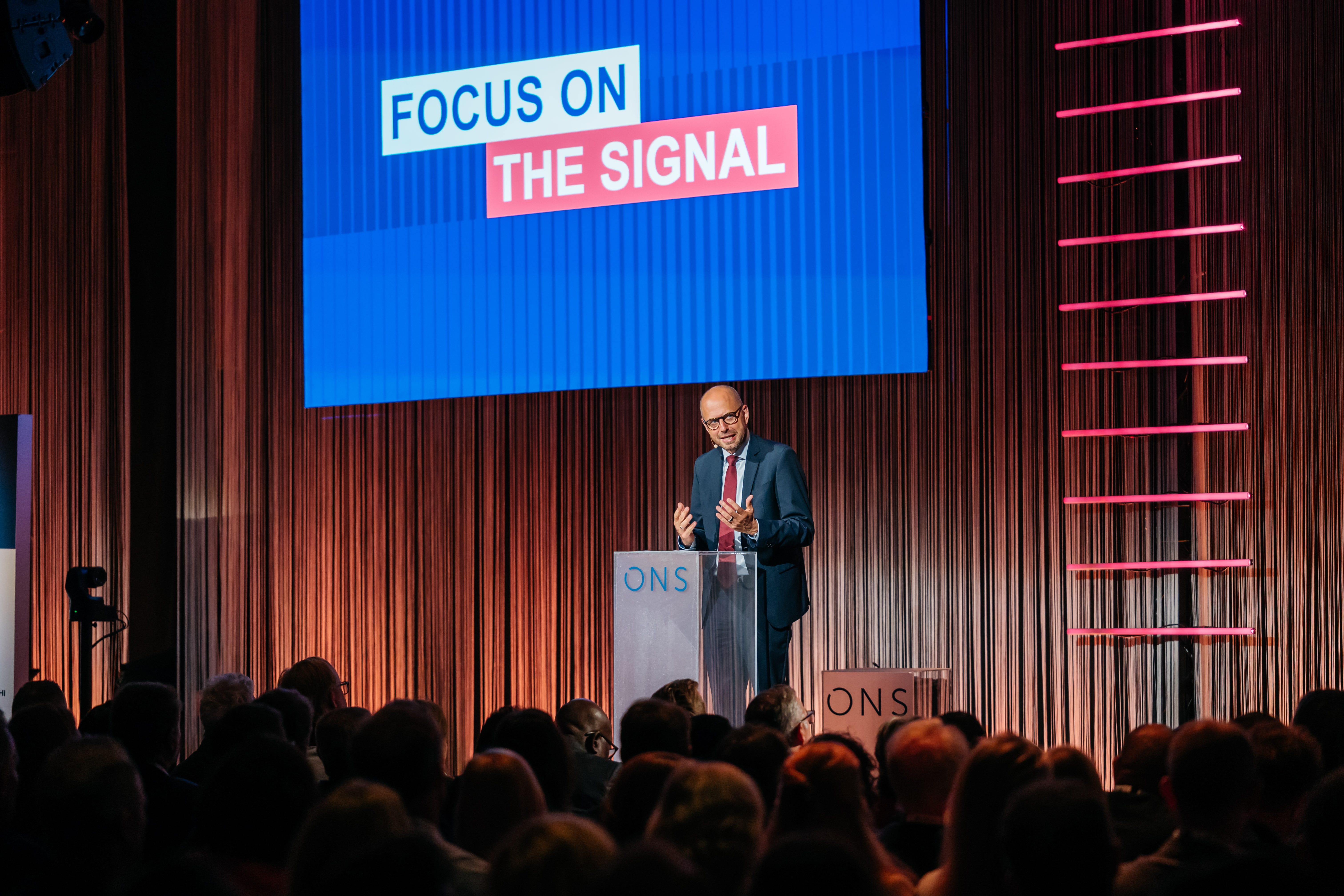
Wind: Europe industrialised the proven technology (The offset)
In the late 1970s the German research ministry funded the development of GROWIAN, a giant 3 MW turbine with a 100 metre rotor. Leading utilities coordinated the project and the machine builder MAN built it. It ran for only 420 hours and was torn down in 1988; it was, however, useful to push the boundaries of technical feasibility.
What scaled in wind were small wind turbines, built and commercialised in Denmark. In 1979 Vestas, then a maker of farm equipment, sold its first turbine: 30 kW, with a 10 metre rotor. Denmark paid up to 30% of the installation cost of new turbines. Then came California. In the first half of the 1980s Vestas received orders for 155, then 550, then 1,200 turbines. This allowed Vestas to shift to serial production and grow steeply. When the Californian market collapsed in 1986, Vestas nearly went down with it.
Meanwhile in Germany the government created the demand for fast market expansion. In 1989 it launched a 100 MW programme, later raised to 250 MW, and from 1991 a feed-in law paid wind at least 90% of the average retail power price. Germany went from about 20 MW of wind in 1989 to over 1,100 MW in 1995. By the early 2000s Danish makers alone held over 40% of the world market, and in 2004 European makers built over 80% of the turbines installed worldwide.
China learned from Europe. Chinese makers such as Goldwind licensed European designs, from Jacobs and REpower. In 2005 China required 70% local content in its wind farms, boosting Chinese manufacturers. In 2007 Chinese makers outsold foreign ones at home for the first time. In 2010 China added more wind capacity than all of Europe. In 2024 the four largest turbine makers in the world were Chinese.
And yet Europe could hold on to the market and keep strong industrial champions. European turbines win more than nine out of ten projects in Europe, and European makers still lead outside China. We passed all three gates first and could profit from it.
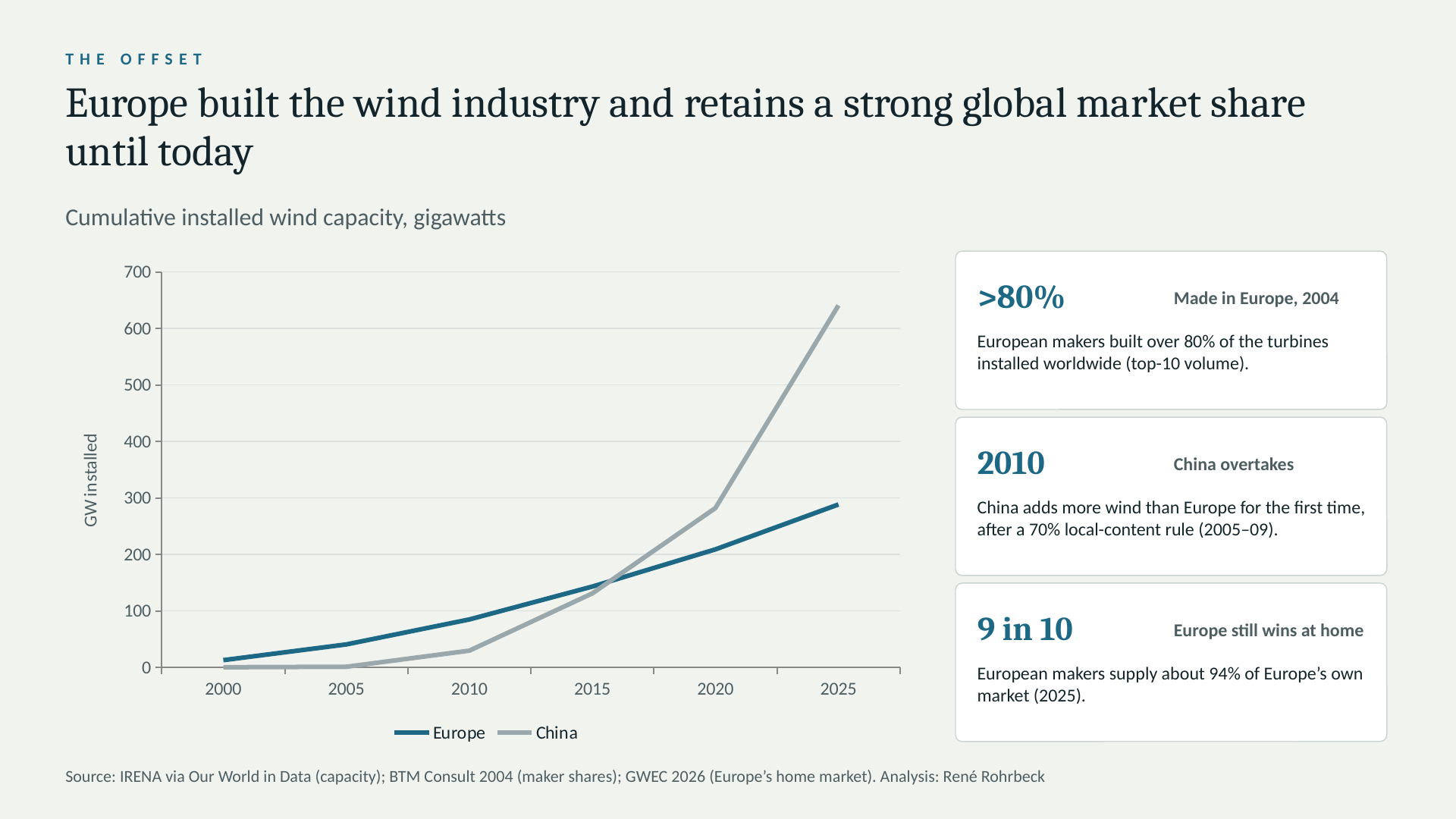
Solar: Germany built the market, China built the factories (The offset)
Solar started the same way. With the EEG, Germany paid rooftop owners up to 57 cents per kWh from 2004, guaranteed for 20 years. The return on investment was fast, and households as well as companies rushed to invest and install. In most years between 2004 and 2010 Germany installed around half of the world’s new solar capacity.
European companies like Q-Cells from Bitterfeld, in 2007 the world’s largest maker of solar cells, were initially very successful. In 2007, Germany produced about a fifth of the world’s cells and modules.
But European production capacity did not grow at the pace of the market, while China invested heavily on the back of German demand. The Chinese share of world production went from 7% in 2005 to 45% in 2010. In 2009 Chinese modules already held 63% of the EU market. In 2011 it was 80%. In April 2012 Q-Cells filed for insolvency. In 2013 the EU rushed to mount trade defences; the industry was, however, already lost, and the defensive measures expired in September 2018.
Today China makes over 80% of every part of a solar panel and has invested about ten times as much as Europe in solar factories since 2011. The scale made solar, at the best sites, the cheapest source of electricity in history: module prices fell from about $2.50 per watt in 2010 to under $0.30 in 2024. European, and in particular German, electricity customers were very successful in financing China’s industrial build-up.
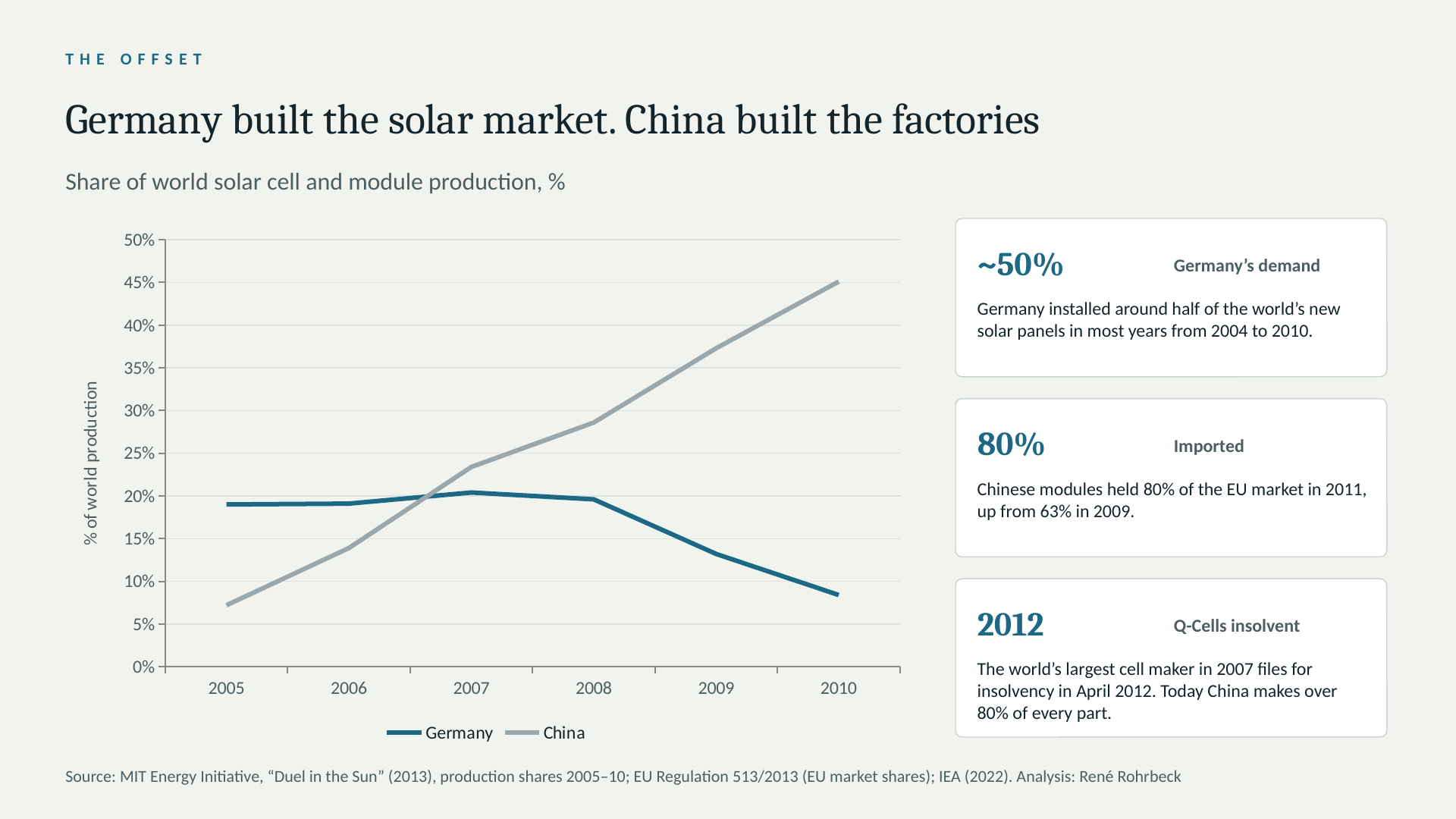
Why one race was won and the other lost (The backset)
When I look at the two stories side by side, three differences stand out.
Who triggered the tipping point? In wind, Danish grants and German tariffs paid for turbines that were, for many years, mostly made in Europe. In solar, the EEG paid for every kilowatt-hour, wherever the panel was made. That created demand, and the fastest-scaling companies, which were in China, won the global market.
Who productised? GROWIAN was a project. The Danish turbine was a product, ready to be scaled. In solar, it was China that turned the panel into a commodity product and made it at a scale no European competitor was able to match.
Support and stabilise an emerging market. Wind had twenty years of stable home demand to grow local champions. Solar boomed so fast that the ability to scale up fastest won the market. If you will, China used Europe’s wind playbook against us: push technology development and learn from others, build a scalable design, protect the home market, and scale fast to lead on cost.
What it means for the next race (The move)
Technological tipping points can be triggered and there are many future technologies that can unlock large value pools. The next race is already on: electrolysers. Europe is highly motivated to create both an industry and a market. China is ahead on price: in 2025 a Chinese alkaline electrolyser cost 500–1,100 dollars per kW installed, against 1,900–2,500 outside China. However, we already have two lessons to retain:
Policymakers are key to creating stable and reliable demand, so that the entire value chain can form and CAPEX-heavy production can scale.
European producers should aim to move as fast as possible to standardised designs and scalable products, as Vestas did in the 1980s.
Why this matters
Wind is a European job engine. In 2024 the wind industry employed about 443,000 people in Europe, 211,000 directly and 232,000 indirectly, and around 100,000 of the direct jobs are in well paid manufacturing jobs (WindEurope). By 2030 this could grow to more than 600,000 jobs.
Solar is now a backbone of Europe’s power supply. In 2025 solar panels produced a record 369 TWh, more than 13% of the EU’s electricity and more than coal (Ember). Most of these panels were made in China.
Which race do you think Europe can still win? Simply reply to this email.
The Offset is free. If it helped you, forward it to one colleague.
NEXT IN THE OFFSET · #3
Is the space race lost for Europe? And what tech opportunities next?
Space is a story Europe started well and then let others finish. In the second half I go back to the “sci-fi” technologies from our ONS panel, small modular reactors, hot brick storage and fusion, and look at where Europe still has a real chance.